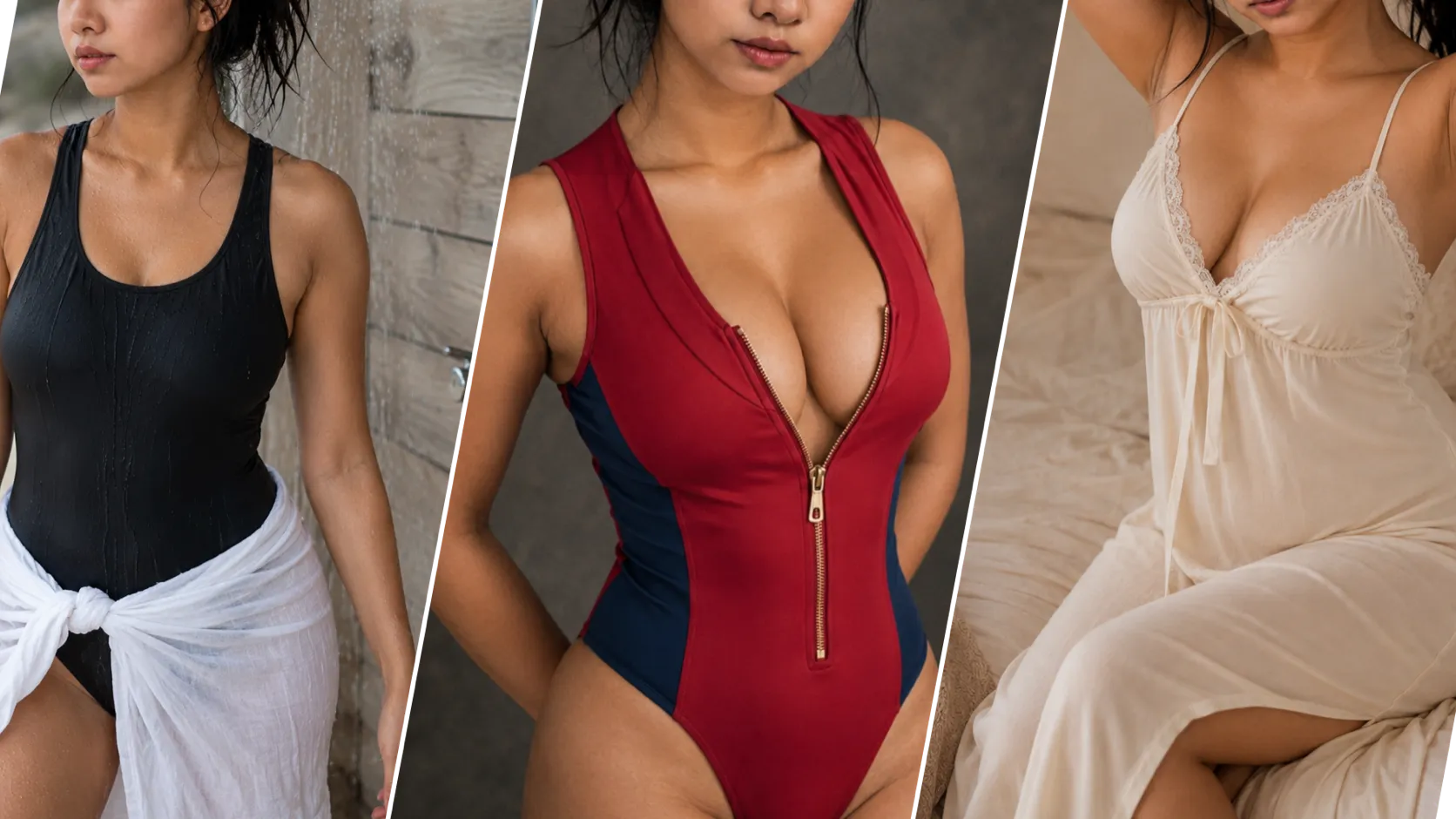
I'm going to say something that a lot of women think but rarely say out loud: my biggest insecurity is my weight. It always has been.
Not in a "I should probably eat healthier" way. In a deep, constant, background-noise kind of way. The kind that makes you check your reflection in every window you pass. The kind that makes you suck in your stomach before someone takes a photo. The kind that turns getting dressed in the morning into a small battle you fight before the day even starts.
I know I'm supposed to say I love my body. I know the script. But I'd rather be honest — because I think more women relate to the messy middle than the polished ending.
Where it started
If you grew up Filipino, you already know. Body commentary isn't just common — it's casual. You walk into a family gathering and before anyone asks how you are, someone will say "tumaba ka" — you got fat. Not with cruelty, usually. Just as a fact. Like commenting on the weather.
But when you hear it enough — from family, from friends, from people who love you — it stops being a comment and starts becoming the lens you see yourself through.
I was petite in uni. I know this because I remember it like a different life — the way my clothes fit, the way I moved, the way I didn't think about my body at all. It was just there, doing its job, and I didn't give it a second thought.
Now I think about it constantly.
What changed
Moving to Australia changed my body. Not dramatically — but enough for me to notice. Enough for my clothes to fit differently. Enough for me to avoid certain photos.
Winter was the hardest. The cold lasts for months, and my motivation to hike or stay active disappeared with the sun. I gained weight. I felt it in my arms, my face, my midsection. I'd grab my dumbbells — my husband and I call them "the fangs" — and try to work out in the bedroom, telling myself I'd get back to where I was.
But where I was keeps moving. And chasing the body I had at 21 when I'm 27 is a race I'm never going to win.
The stuff I'm unlearning
My weight is not my worth. I know this intellectually. Feeling it is a different thing entirely. But I'm working on closing that gap — because I've spent too many years letting a number on a scale determine whether I have a good day or a bad one.
Comments from family aren't facts. "Tumaba ka" is an observation from someone who sees you twice a year. It tells you nothing about your health, your strength, or your value. Learning to hear those words without absorbing them is one of the hardest boundaries I've ever had to set.
My body did a lot for me. It survived burnout, carried me through a five-year toxic job, moved to a different country, and adapted to a new climate, a new diet, a new life. And instead of thanking it, I've spent years criticising it for not looking the way it used to.
Comparison is the fastest way to ruin your day. Scrolling through Instagram and measuring myself against women with different bodies, different genetics, different lives — that's not motivation. It's self-harm in disguise. I'm getting better at recognising when I'm doing it, and putting the phone down.
The shortcut that comes at someone else's cost
While I'm here being honest, let's talk about something I've been noticing — because I can't write about weight and body image in 2026 without mentioning it.
Ozempic. Mounjaro. Tirzepatide. Weight loss drugs are everywhere right now, and they've become the shortcut of choice for a growing number of people — including young women who don't have the medical conditions these drugs were actually designed for.
Here's what most people don't realise: Ozempic and Mounjaro were originally developed to treat Type 2 diabetes. They help regulate blood sugar and insulin. The weight loss is a side effect — a powerful one, which is why pharmaceutical companies later released separate versions specifically for weight loss (Wegovy and Zepbound). But the demand for the diabetes versions has exploded because people are using them off-label to lose weight, often without a prescription for diabetes at all.
I want to be clear: I'm not judging anyone's personal choices. Everyone's body is their own, and what you do with it is your business. But what I've been observing — and what concerns me — is the normalisation of taking a diabetes medication as a substitute for movement, nutrition, and the slow, unglamorous work of building a healthy relationship with your body.
I saw a video recently about pharmacies in the Philippines running out of Ozempic and similar medications. Not because more people are being diagnosed with diabetes — but because so many people are using them purely for weight loss that the people who actually need them to manage their blood sugar and stay healthy can't get them. That sat with me for a long time.
There are people with Type 2 diabetes who depend on these medications to regulate their insulin and prevent serious complications — heart disease, nerve damage, kidney failure. And they're walking into pharmacies and being told there's a shortage — because the supply is being consumed by people who want a faster way to drop a dress size.
I understand the appeal. When you've spent years feeling uncomfortable in your own skin, a simple injection that makes the weight disappear sounds like a miracle. But I also think there's something worth questioning about a culture that would rather medicate its way to thinness than sit with the discomfort of learning to accept the body it already has.
This isn't about shaming anyone who uses these drugs. It's about asking why we've reached a point where the pressure to be thin is so intense that young, healthy people are turning to medication meant for a completely different purpose — and nobody seems to think that's a problem.
I've seen it with my own eyes. People I knew from uni — acquaintances, batchmates — who suddenly look completely different. And I don't mean the kind of difference that comes from months of exercise and eating well. When someone loses weight through movement, you can tell — there's a glow, muscle tone, a healthy fullness in their face. But the people I've noticed who lost weight quickly? They look... dry. Deflated. Thinner, yes, but not healthier. It's an uncanny feeling that's hard to put into words. I'm not here to judge anyone's choices — just sharing what I've observed.
Where I am now
I'm not at the end of this. I haven't had some breakthrough where I woke up and suddenly loved everything about my body. Some days I feel good. Some days I avoid mirrors. Most days I'm somewhere in between.
But here's what's different now: I'm trying to stop treating my body like a problem to solve and start treating it like something that deserves kindness — even when it doesn't look the way I want it to.
I still work out. I still go for hikes when the weather allows it. I still grab the fangs and do arm exercises in the bedroom when I feel like Luisa from Encanto. But I'm trying to do those things because they make me feel good — not because I'm punishing myself for how I look.
It's a process. A slow, nonlinear, sometimes frustrating process. But I'd rather be in the middle of it and honest about it than pretend I've arrived somewhere I haven't.
If you've ever looked in the mirror and felt like your body is the enemy — it isn't. It's the only one you've got, and it's been carrying you through things most people don't even know about. Maybe it deserves a little more grace than you've been giving it.



Comments 0